|
Product Details:
|
| Material: | Galvanized Steel Sheet | Gasket: | EPDM Closed Cell |
|---|---|---|---|
| Thickness: | 1.0mm-1.2mm | Band Width: | 28mm |
| Diameter Range: | 80mm-600mm | Locking Type: | Over-centre Toggle |
| Application: | Cleanroom, Kitchen Extract, Dust Extraction | Performance: | Low Leakage Sealed Joint |
| Highlight: | Airtight EPDM sealed duct clamp,Low leakage duct joint clamp,Gasket channel duct clamp |
||
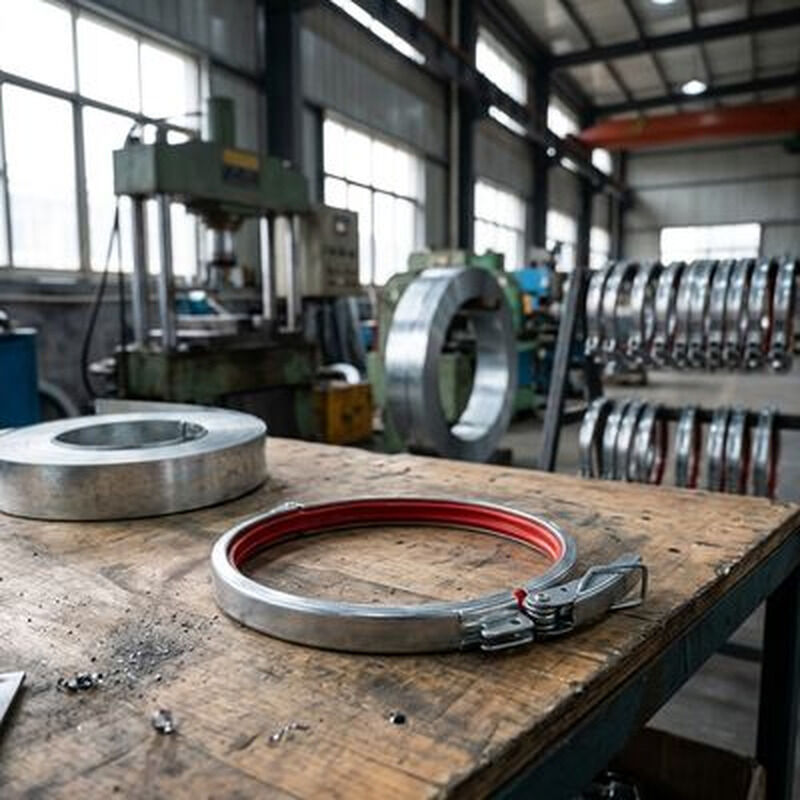
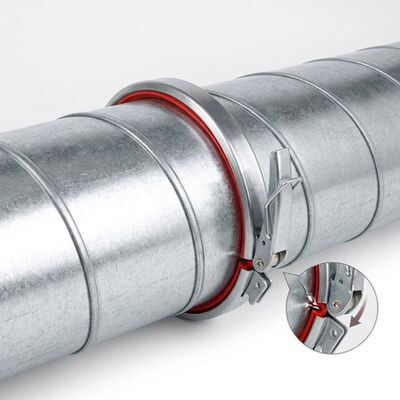
Leakage in a ventilation system is rarely caused by the duct; it comes from the joints. This duct clamp is designed around the seal rather than treating it as an accessory. The EPDM gasket sits in a rolled channel that is deeper than the gasket section, so when the toggle closes, the rubber is compressed in a controlled space instead of being squeezed out sideways. The result is a joint whose leakage stays consistent whether the fitter closes it carefully or quickly, which matters on a large project where hundreds of joints are made by different crews.
The clamp is pressed from 1.0mm to 1.2mm steel and finished galvanized, with a smooth inner face that presses the duct ends together without cutting the spiral seam. It is used where duct leakage directly costs money or upsets a controlled process: cleanrooms holding pressure, kitchen and laboratory exhaust that must not bleed into adjacent rooms, and dust extraction lines where a leaking joint means dust on the floor.
Where a project has a leakage class to meet, the fitting is specified by performance rather than by shape, so an airtight EPDM sealed duct clamp has to demonstrate the result. We treat a low leakage duct joint clamp as a tested component: sample joints are assembled on our bench and reported, and a gasket channel duct clamp is released only after the duct end preparation has been agreed.
| Product Type | Sealed duct clamp with captured gasket |
|---|---|
| Body Material | Galvanized steel sheet, 1.0mm / 1.2mm |
| Band Width | 28mm, wide face for even seal load |
| Gasket | EPDM closed cell, shore A 55 typical |
| Channel Depth | Gasket fully captured, no lateral escape |
| Working Diameter | 80mm to 600mm, continuous adjustment |
| Compression | Set by over-centre toggle travel, not by torque |
| Leak Performance | Verified on sample joints in our own test rig |
| Surface | Galvanized, edge deburred |
| Re seal | Clamp can be reopened and re closed without new gasket |
| Working Temperature | -20 C to +110 C at the gasket |
| Packing | Carton with shock insert, quantity per size |
If your project has a leakage class requirement, send us the specification and the duct diameters and we will assemble sample joints, test them on our bench and report the result so the class can be confirmed before production. Sealing quality also depends on the duct end: a square, burr free duct cut compresses the gasket evenly, while a rough or ovalised end will leak whatever clamp is used. We can supply a cutting and deburring note with the shipment for the installation team.
If the tender documents call for an airtight EPDM sealed duct clamp with a stated leakage figure, send the test method and the diameters and we will run the same procedure here. A low leakage duct joint clamp is only as good as the duct end it sits on, so the gasket channel duct clamp should be paired with a square, deburred cut.
A: We test sample joints of the same diameter and duct type in our own rig and issue the result with the quotation. If the specification names a standard test method, tell us which one and we will follow the same procedure so the figures can be compared directly.
A: No sealant is required in normal service, which is one reason this clamp is chosen for ducts that will be opened again. On badly ovalised or damaged duct ends a thin sealant bead can help, but the joint should be corrected at the duct rather than relying on the compound.
A: The gasket is supplied as a separate part and can be replaced without replacing the clamp. Spare gaskets can be packed with each carton so the installation crew always has one at hand.
A: Yes. The gasket is compressed against the duct wall whichever side the pressure acts from, and the toggle only sets the compression. For high negative pressure dust systems we recommend the 1.2mm band for extra stiffness.
A: No, in normal service the compressed gasket is the seal. Tape is sometimes used on site as a habit, but a correctly fitted low leakage duct joint clamp does not need it, and the gasket channel duct clamp can be reopened for inspection without cutting tape away.
Share your duct specification and leakage requirement, and we will test a sample joint and quote the clamp, gasket and spare parts you need.
Contact Person: Amy
Tel: 18931182030
Fax: 86-311-85329078